Metsäpolku

Metsäpolku

Tämä oppimispolku johdattelee kulkijansa suomalaiseen metsätalouteen mielenkiintoisilla tietoiskuilla.
Polun varrelta löydät:

  • Mielenkiintoista tietoa metsiin ja metsien käyttöön liittyen
  • Käytännön esimerkkejä metsätaloudesta

Metsämiesten Säätiö on tunnistanut tämän hankkeen rahoittamisen arvoiseksi. Lahjoituksilla Säätiö kasvattaa apurahojen määrää metsäalan hyväksi. Sota-ajan savottajätkien muonahuollosta alkunsa saanut Säätiö kunnioittaa historiaansa nimellään ja tasa-arvoisella toiminnalla. Lisätietoja www.mmsaatio.fi

Uudistava metsätalous - Regenerative forestry

Uudistavalla metsätaloudella pyritään lisäämään metsien monimuotoisuutta. Tavoitteena on jättää metsät tuleville sukupolville paremmassa kunnossa kuin olemme itse ne saaneet – entistä elinvoimaisempina, monimuotoisempina ja ilmastokestävämpinä.

Metsänkäsittelylle on useita eri vaihtoehtoja:  

  • Jaksollinen kasvatus = metsikkö koostuu saman ikäisistä ja -kokoisista puista  
  • Jatkuva kasvatus = metsikköä kasvatetaan peitteisenä eikä avohakkuita tehdä. Turvemailla hyvä vaihtoehto – antaa vesistöhyötyjä, kun humusta ja ravinteita ei valu vesistöihin  
  • Arvokkaat elinympäristöt on mahdollista suojella vapaaehtoisesti  
  • Kaikissa metsänkäsittelyn tilanteissa on tärkeää huomioida, mitkä toimenpiteet edistävät juuri kyseisen kohteen ominaispiirteiden säilymistä  

Lähteet:  
Uudistava metsätalous | Metsä Group  
Metsän kasvatusmenetelmät – jaksollinen ja jatkuva kasvatus | Metsänhoidon suositukset  
Jatkuvaan kasvatukseen tähtääminen – Kuvaus | Metsänhoidon suositukset  
Metsien suojelu ja elinympäristöjen hoito | Metsäkeskus  
Suojelusäätiö täydentää metsien suojeluverkostoa | Metsä Group  


Regenerative forestry

Regenerative forestry aims to increase the diversity of forests. The goal is to leave the forests in better condition for future generations than we have received them – more vital, diverse and climate-resistant.  

There are several different options for forest management:  

  • Periodical growing = the stands consist of trees of the same age and size
  • Continuous growing = the stands are grown under cover and no open fellings are made. A good alternative in peatlands to provide water benefits when humus and nutrients are not flowing into water system
  • It is possible to voluntarily protect valuable habitats
  • In all situations of forest management, it is important to consider which measures contribute to the preservation of the characteristics of the particular site in question.

Metsäala tarjoaa työpaikkoja monissa eri tehtävissä sekä eri koulutuksen omaaville:  

  • Metsuri  
  • Puunostaja  
  • Metsäkoneenkuljettaja  
  • Puutavara-auton kuljettaja  
  • Sahatyöntekijä  
  • Puuseppä  
  • Arkkitehti  
  • Markkinoinnin asiantuntija  
  • Tutkija  
  • Ympäristöasiantuntija   

Harjussa voit opiskella metsäalan perustutkinnon, lue lisää: Hae opiskelemaan – Harjun oppimiskeskus  


Lähteet
Metsäteollisuus Löydä urapolkusi metsästä – Metsäteollisuus ry

Occupations in forestry 

The forest sector provides careers in many different positions and opportunities for people with diverse educational backgrounds: 

  • Lumberjack 
  • Forest specialist  
  • Forest machine operator  
  • Timber-truck operator  
  • Sawmill worker  
  • Carpenter  
  • Architect  
  • Marketing specialist  
  • Researcher  
  • Environment specialist  

Talousmetsien luonnonhoito on luonnon monimuotoisuuden ja luonnon tarjoamien hyötyjen ylläpitämistä ja vahvistamista metsänkäsittelyssä. Luonnonhoidon keinoja voidaan toteuttaa kaikissa metsätaloustoimissa ja metsän kehitysvaiheissa.  

Luonnonhoidon keinoja ovat esimerkiksi  

  • Säästöpuiden jättäminen  
  • Suojatiheikköjen jättäminen  
  • Tekopökkelöiden tekeminen  
  • Lahopuun turvaaminen  
  • Lehtipuusekoituksen ylläpito  
  • Kulotus  
  • Lajien turvaaminen metsänkäsittelyssä  
  • Pölyttäjien suosiminen metsänhoidossa  

Tiesitkö?  

  • Lahopuusta riippuvaisia tai siitä hyötyviä lajeja on noin viidennes Suomen metsien lajeista  
  • Lahopuun määrän kasvattaminen on yksittäisenä tekona yksi vaikuttavimmista monimuotoisuustoimista 
  • On tärkeää säästää jo olemassa olevaa lahopuuta – älä kerää sitä polttopuuksi 
  • Mitä enemmän metsässä on erilaisia puulajeja, sitä isompaa lajikirjoa metsä voi ylläpitää 
  • Taloudellisesti vähäarvoiset lehtipuut (raita, haapa, lepät, jalot lehtipuut) ovat lajistollisesti rikkaimpia 
  • Säästämällä ääreviä elinympäristöjä saadaan turvattua suurelle joukolle uhanalaisia lajeja elinympäristöjä  

Äärimmäisen uhanalainen kallioketo  

  • Kalliokedot ovat ohuen maakerroksen peittämillä kalliopinnoilla esiintyviä, laidunnuksen tai niiton muovaamia pienialaisia puuttomia tai vain reunaosiltaan puustoisia niittyjä  
  • Yleensä matalakasvuisia, laakeita ja siksi herkkiä puuston lisääntymisen aiheuttamille muutoksille  
  • Omaa monipuolisen kasvi- ja hyönteislajiston, johon kuuluu usein uhanalaisia lajeja  
  • Kallioketoja arvellaan Suomessa olevan nykyisin vain 250–350 hehtaaria.  

Lähteet:  

Luonnonhoito ja monimuotoisuus | Metsänhoidon suositukset 

Lahopuun turvaaminen – Päätöksenteko | Metsänhoidon suositukset  

Luontotyypit – Kalliokedot – Luontotyyppien uhanalaisuus  

Safeguarding diversity  

Nature management in commercial forests involves maintaining and enhancing biodiversity and the ecosystem services provided by nature. Measures that support nature management can be implemented in all forestry operations and at every stage of forest development.

Nature management measures include:

  • Leaving retention trees
  • Leaving protective thickets for wildlife
  • Creating high stumps
  • Preserving deadwood
  • Maintaining a mixture of deciduous trees
  • Controlled burning
  • Safeguarding species in forest management
  • Supporting pollinators in forest management

Did you know?

  • Approximately one fifth of the species found in Finnish forests depend on or benefit from deadwood.
  • Increasing the amount of deadwood is one of the most effective actions an individual can take to promote biodiversity.
  • It is important to preserve existing deadwood and not collect it for firewood.
  • The greater the diversity of tree species in a forest, the more species the forest can support.
  • Deciduous trees with low economic value, such as goat willow, aspen, alder, and valuable broadleaved species, support exceptionally high levels of biodiversity.
  • By preserving valuable habitats, it is possible to protect a large number of endangered species.


Critically Endangered Rocky Dry Meadows

  • Rocky dry meadows are small, open grasslands that have developed through grazing or mowing on bedrock surfaces covered by a thin layer of soil. Trees are typically absent or found only along the edges.
  • These habitats are generally low-growing and open, making them highly sensitive to changes caused by encroaching tree growth.
  • Rocky dry meadows support a rich diversity of plant and insect species, including many threatened and endangered species.
  • It is estimated that only 250-350 hectares of rocky dry meadows remain in Finland today.

Metsänomistaja päättää itse omissa metsissään puuntuotannon, monimuotoisuuden turvaamisen ja metsän muiden käyttömuotojen yhteensovittamisesta ja painotuksista.  

Metsien monikäyttömuotoja ovat esimerkiksi  

  • Marjastus ja sienestys  
  • Virkistys- ja ulkoilukäyttö
  • Metsästys 

Oletko miettinyt näitä monikäyttöhyötyjä?  

  • Puhdas vesi  
  • Puhdas ilma  
  • Yhteyttävä kasvillisuus tuottaa happea ilmakehään  
  • Kasvillisuus suodattaa ravinteita vedestä  

Tutustu retkietikettiin: Retkietiketti – Retkeily & ulkoilu – Luontoon  

Kuva: Luonto on jokaisen oikeus – Pohde  

Lähde: Metsien monikäyttö ja virkistyskäyttömahdollisuuksien lisääminen | Metsänhoidon suositukset 

Multiple use of forests and everyone’s rights 

The forest owner decides on the coordination and emphases of wood production, safeguarding biodiversity and other uses of the forest in their own forests. 

For example, multi-use forms of forests include:  

  • Berry and mushroom picking  
  • Recreational and outdoor use  
  • Hunting 

Everyone’s rights give everyone living or staying in Finland the right to use nature regardless of who owns the area. Use must not damage another person’s property or hinder land use by the landowner.   

Have you thought about these multi-use benefits?  

  • Clean water
  • Clean air 
  • Photosynthesizing plants produce oxygen in the atmosphere
  • Plants filter nutrients from water

Check out the outdoor etiquette: Retkietiketti – Retkeily & ulkoilu – Luontoon  

Metsänhoidollisia toimenpiteitä ovat muun muassa:  

  • maanmuokkaus 
  • taimien istutus 
  • varhaisperkaus ja taimikonharvennus 
  • erilaiset hakkuut 
  • lannoitukset 

Kaikkien hoitotoimenpiteiden tarkoituksena on saada metsä kasvamaan paremmin. Hyvin kasvava metsä sitoo myös enemmän hiiltä. 


Forest management measures

Forest management measures include:  

  • Tilling of soil  
  • Planting of seedlings
  • Early perching and thinning on seedlings  
  • Different types on logging  
    Fertilizations  

All management measures are aimed at making the forest grow better. A well-growing forest also binds more carbon. 

Lisätietoa

Piian kuvaamat videot metsänhoitotöistä. Lisätään uusia videoita sitä mukaa, kun hoitotoimenpiteitä tehdään. Laitetaan nyt aluksi videot hakkuusta ja maanmuokkauksesta.  

Piian työmaakuvat -kansio: https://photos.app.goo.gl/HvJbHeVbeCy56ypG6  

Mainitaan yhteydessä toteutuspäivä ja perusteita toimille:  

Taustatietoa kohteesta  

  • Tällä kohteella toteutettiin varttuneen kuusikon uudistushakkuu, jonka yhteydessä yli 30 % puista todettiin kuusenjuurikäävän lahottamiksi 
  • Kuusenjuurikääpä on eteläisen Suomen merkittävin sienitauti: se lahottaa puun ja altistaa metsätuhoille. Tartunta huomataan yleensä vasta hakkuuvaiheessa  
  • Kohde oli tarkoitus sekaistuttaa männylle ja kuuselle, mutta kuusi vaihdettiin juurikäävän takia rauduskoivuksi  
  • Puulajin vaihto on tehokkain keino katkaista taudin leviäminen 
  • Rauduskoivu on taimikkovaiheessa kuusta alttiimpi hirvituhoille, mutta se sopeutuu paremmin ilmastonmuutoksen tuomiin haasteisiin  

Hakkuu Video albumissa Harjun työmaakuvat – Google Kuvat  

Hakkuu on toteutettu 11.6.2026. Toteutuksessa huomioitu monimuotoisuuden lisääminen sertifioinnin edellytyksiä laajemmin. Kohde on toteutettu Metsä Group Plus -hoitomallin mukaan, jossa jätetään enemmän säästöpuita ja tekopökkelöitä. Lisäksi säästöpuuryhmä poltetaan.  

Maanmuokkaus Video albumissa Harjun työmaakuvat – Google Kuvat  

Maanmuokkaus on toteutettu 7.7.2026. Laadukas maanmuokkaus on yksi metsänkasvatusketjun tärkeimmistä töistä. Sen avulla luodaan otolliset kasvuolosuhteet taimille, ja uuden metsän kasvu pääsee hyvin alkuun.  


Background information of the forest site

  • This site was used for the regeneration felling of a mature spruce forest, where more than 30% of the trees were found to be rotted by spruce root rot. 
  • Spruce root rot is the most significant fungal disease in southern Finland: it rots the tree and exposes it to forest damage. The infection is usually not discovered until the logging stage
  • The site was supposed to be planted with pine and spruce, but spruce were replaced by silver birch due to root rot. 
  • Changing the tree species is the most effective way to cut off the spread of the disease
  • Iron birch is more susceptible to moose damage during the seedling stage, but it adapts better to the challenges of climate change


The felling was carried out on 11 June 2026. Increasing biodiversity has been taken into account in the felling more extensively than the prerequisites for forest certification. The site has been implemented according to the Metsä Group Plus management model, which leaves more retention trees and high stumps. Also, the savings tree group is going to be burned as an diversity act.  

Felling: Video albumissa Harjun työmaakuvat – Google Kuvat  

Tilling of soil has been implemented on 7.7.2026. High-quality tillage is one of the most important works in the forestry chain. It is used to create favorable growing conditions for seedlings, and the growth of the new forest gets off to a good start. 

Soil preparing: Video albumissa Harjun työmaakuvat – Google Kuvat  


Lähteet: 

metsänhoidon suositukset  

Maanmuokkaus parantaa taimien kasvua  

Juurikääpä | Metsäkeskus  

Metsänhoidollisia toimenpiteitä ovat muun muassa:  

  • maanmuokkaus 
  • taimien istutus 
  • varhaisperkaus ja taimikonharvennus 
  • erilaiset hakkuut 
  • lannoitukset 

Kaikkien hoitotoimenpiteiden tarkoituksena on saada metsä kasvamaan paremmin. Hyvin kasvava metsä sitoo myös enemmän hiiltä. 


Taustatietoa kohteesta  

  • Tällä kohteella toteutettiin varttuneen kuusikon uudistushakkuu, jonka yhteydessä yli 30 % puista todettiin kuusenjuurikäävän lahottamiksi. Kuusenjuurikääpä on eteläisen Suomen merkittävin sienitauti: se lahottaa puun ja altistaa metsätuhoille.
  • Tartunta huomataan yleensä vasta hakkuuvaiheessa 
  • Kohde oli tarkoitus sekaistuttaa männylle ja kuuselle, mutta kuusi vaihdettiin juurikäävän takia rauduskoivuksi
  • Puulajin vaihto on tehokkain keino katkaista taudin leviäminen
  • Rauduskoivu on taimikkovaiheessa kuusta alttiimpi hirvituhoille, mutta se sopeutuu paremmin ilmastonmuutoksen tuomiin haasteisiin  

Katso video hakkuusta 11.6.2026. Toteutuksessa huomioitu monimuotoisuuden lisääminen sertifioinnin edellytyksiä laajemmin. Kohde on toteutettu Metsä Group Plus -hoitomallin mukaan, jossa jätetään enemmän säästöpuita ja tekopökkelöitä. Lisäksi säästöpuuryhmä poltetaan.  

Katso video maanmuokauksesta, joka on toteutettu 7.7.2026. Laadukas maanmuokkaus on yksi metsänkasvatusketjun tärkeimmistä töistä. Sen avulla luodaan otolliset kasvuolosuhteet taimille, ja uuden metsän kasvu pääsee hyvin alkuun.  


Lähteet:  

metsänhoidon suositukset  

Maanmuokkaus parantaa taimien kasvua  

Juurikääpä | Metsäkeskus  

Forest management measures  

Forest management measures include:  

  • Tilling of soil 
  • Planting of seedlings  
  • Early perching and thinning on seedlings  
  • Different types on logging  
  • Fertilizations  

 All management measures are aimed at making the forest grow better. A well-growing forest also binds more carbon.  

Background information of the forest site  

  • This site was used for the regeneration felling of a mature spruce forest, where more than 30% of the trees were found to be rotted by spruce root rot. 
  • Spruce root rot is the most significant fungal disease in southern Finland: it rots the tree and exposes it to forest damage. The infection is usually not discovered until the logging stage 
  • The site was supposed to be planted with pine and spruce, but spruce were replaced by silver birch due to root rot. 
  • Changing the tree species is the most effective way to cut off the spread of the disease  
  •  Iron birch is more susceptible to moose damage during the seedling stage, but it adapts better to the challenges of climate change 

The felling was carried out on 11 June 2026. Increasing biodiversity has been taken into account in the felling more extensively than the prerequisites for forest certification. The site has been implemented according to the Metsä Group Plus management model, which leaves more retention trees and high stumps. Also, the savings tree group is going to be burned as an diversity act.  

The felling was carried out on 11 June 2026. Increasing biodiversity has been taken into account in the felling more extensively than the prerequisites for forest certification. The site has been implemented according to the Metsä Group Plus management model, which leaves more retention trees and high stumps. Also, the savings tree group is going to be burned as an diversity act. Felling video

Tilling of soil has been implemented on 7.7.2026. High-quality tillage is one of the most important works in the forestry chain. It is used to create favorable growing conditions for seedlings, and the growth of the new forest gets off to a good start : Soil preparing video

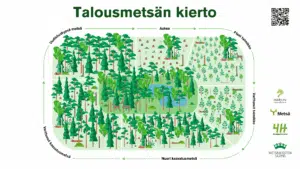
The economic forest cycle  

Säästöpuut ovat eläviä puita, jotka jätetään pysyvästi metsään. Ne säästetään kaikissa metsänkäsittelyn vaiheissa, ja ne saavat kasvaa, kuolla ja lahota metsään. Säästöpuiden avulla talousmetsiin saadaan vanhoja ja kookkaita eläviä puita, monimuotoisuuden kannalta arvokkaita puulajeja sekä ajan myötä lahopuuta. 

Säästöpuiden erilaisia hyötyjä:  

  • Monipuolistavat metsikön rakennetta  
  • Muodostavat aikanaan lahopuuta  
  • Voivat pehmentää uudistushakkuun maisemaa  
  • Tarjoavat ravintoa ja pesäkoloja  
  • Toimivat siemenpuina  

Määrän lisäksi myös eriaikaisuus on tärkeää:  

  • Iso määrä lahopuuta kerralla on arvokasta myös, mutta pienempi määrä tasaisesti eri vuosikymmenille jakautuneena on arvokkaampaa  
  • Lajit ovat yleensä riippuvaisia tietyn lahoasteen puusta ja sitten kun puu lahoaa liian pitkälle, ne joutuvat etsimään seuraavan sopivan lahon puun 
  • Jos lahopuuta tulee paljon kerralla, se on myös liian lahoa suunnilleen samaan aikaan
  • Tämän vuoksi olisi tärkeää, että metsään tulisi tasaisesti vähän kerrallaan uutta lahopuuta  

Lähde: Säästöpuiden jättäminen – Kuvaus | Metsänhoidon suositukset  

Retention trees  

Retention trees are living trees that are left permanently in the forest. They are spared at all stages of forest management and are allowed to grow, die and rot in the forest. Retention trees provide old and tall living trees in commercial forests, wood species valuable for diversity, and, over time, decayed wood.   

Different benefits of retention trees:  

  • Diversifying the structure of the forest
  • In time, they will form decaying trees
  • Can soften the landscape of regeneration logging
  • Provides food and nest holes for birds
  • Operate as seed trees

In addition to quantity, timing is also important:  

  • A large amount of decayed wood at once is also valuable, but a smaller amount evenly distributed over different decades is more valuable
  • Species tend to depend on a certain degree of decay on a tree and then when the tree decays too far, they have to find the next suitable decayed tree
  • If a lot of decaying wood comes at once, it is also too decayed at about the same time
  • Therefore, it would be important for there to be a steady stream of new decaying wood in the forest at a time.

Monimuotoisuudelle tärkeän lahopuun määrän lisääminen yksin säästöpuiden avulla voi olla hidasta. Tekopökkelöiden avulla talousmetsiin saadaan lahopuuta nopeasti.  

Tekopökkelö on 2-5 metrin korkeudelta katkaistu puu, jonka latvus suositellaan jättämään maapuuksi lahoamaan. Pökkelöt tarjoavat monimuotoisia elinympäristöjä kuolleessa puussa eläville sieni- ja hyönteislajeille sekä pesäkolon paikkoja linnuille.  

Hyvä tietää tekopökkelöistä:  

  • Niitä voidaan tehdä kaikissa hakkuissa  
  • Niiden avulla voidaan merkitä tärkeä maastonkohta, esimerkiksi muinaisjäännös  
  • Puu, joka muuten voisi kaatua sähkölinjalle, voidaan pökkelöidä  
  • Eivät merkittävästi kasvata hyönteistuhojen riskiä metsässä  
  • Tekopökkelöillä elää tutkitusti enemmän lajeja kuin hakkuukannoilla  
  • Vaateliaimmat lajit löytyvät juuri tekopökkelöistä  

Lähteet:  

Tekopökkelöiden tekeminen – Kuvaus | Metsänhoidon suositukset  

Tekopökkelöt lisäävät lajimäärää metsässä  

High stumps [te-ko-poek-ke-loe]  

Increasing the amount of deadwood that is important to diversity by using retention trees alone can be slow. With the help of high stumps, decaying wood can be quickly found in commercial forests. High stump is a tree cut from a height of 2 to 5 metres, the crown of which is recommended to be left as groundwood to rot. High stumps provide diverse habitats for species of fungi and insects living in dead wood, as well as nesting holes for birds. 

Good to know about high stumps:  

  • They can be made in all fellings
  • They can be used to mark an important site, such as an ancient relic
  • A tree that could otherwise fall for example on an electric line can be stumped
  • Do not significantly increase the risk of insect damage in the forest
  • More species live on high stumps than on felling stumps, according to research
  • The most demanding species can be found just in the high stumps


Suomessa on tehokas palontorjunta, ja ekologisesta näkökulmasta metsää palaa vuosittain jopa liian vähän. Moni palaneesta puusta riippuvainen laji on nykyään uhanalainen.  

Säästöpuiden poltto on turvallinen ja kustannustehokas tapa luoda metsin pienialaisia paloympäristöjä niitä tarvitseville eliölajeille.  

Palanutta puuta tarvitsevat hyönteiset suunnistavat paloalueelle savun ohjaamina. Paloalueen maahan kehittyy myös omanlaisensa sienilajisto. Myöhemmin hyönteisiä ja sieniä syövät lajit kuten tikka tulevat alueelle.  

Vaikka säästöpuiden polttoryhmät ovat pinta-alallisesti pieniä, ne ovat palaneesta puusta riippuvaiselle lajille elinehto. Palanutta puuta olisi myös tärkeää saada samoille alueille tasaisin väliajoin. Jotkut lajit pystyvät liikkumaan siivillä, mutta esimerkiksi käävät ovat puhtaasti ilmalevityksen varassa. 

Lähde: Lisää palanutta puuta metsiin  

Retention trees combustion group  

Finland has effective fire protection, and from an ecological point of view, there is even too little forest burning every year. Many species dependent on burnt wood are now endangered. Combustion of retention trees is a safe and cost-effective way to create small-scale fire environments in forests for the species that need them. Insects needing burnt wood head for the fire area, guided by smoke. The country of the fire area also develops its own kind of mushroom species. Later, species that eat insects and fungi such as woodpecker enter the area. 

Although small in area, the combustible groups of retention trees are a lifeline for a species dependent on burnt wood. It would also be important to have burnt wood in the same areas at regular intervals. Some species are able to move on wings, but for example bracket fungus purely rely on aerial application  


Puusta voidaan valmistaa monia, arkipäiväsessä käytössämme olevia tuotteita, kuten:  

  • Kartonki  
  • Pehmo- ja tiivispaperi  
  • Sahatavara ja vaneri  
  • Bioenergia  
  • Tekstiilikuitu  
  • Kuivike

Lähteet:  

Biotuotteet  

Tutustu mihin puu pystyy – Uusipuu 

Wood-based products  

There are a number of products that can be made from wood that we use on a daily basis, such as:  

  • paperboard  
  • tissue and seal paper  
  • sawn timber and plywood  
  • bioenergy  
  • textile fibre 

Read more: Tutustu mihin puu pystyy – Uusipuu  

Metsäsertifioinnilla voidaan osoittaa, että metsiä käytetään vastuullisesti ja kestävästi. Metsien hoidossa otetaan siis huomioon sekä ekologinen, taloudellinen että sosiaalinen näkökulma. Metsäsertifioinnissa on tietyt vaatimukset, joita tulee noudattaa ja joita arvioi ulkopuolinen taho. Suomessa on käytössä kaksi suurta sertifiointijärjestelmää PEFC ja FSC. 
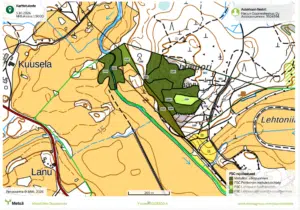
 

Lähde: Metsäsertifiointi | Metsäkeskus  

Forest certification  

Forest certification can be used to demonstrate that forests are used responsibly and sustainably. Forest management therefore takes into account both the ecological, economic and social aspects. Forest certification has certain requirements that the certificate holder must comply with and the fulfilment of which is assessed by an external party There are two major certification systems PEFC and FSC in use in Finland.  

Metsäpolulla käytettyjen kuvien lähteet: 

Esittelykyltti: Kuvapankki
Uudistava metsätalous: MG  
Ammatit: MG  
Monimuotoisuuden turvaaminen: Kuvapankki
Monikäyttö: Kuvapankki
Metsänhoidon toimenpiteet: Essi Niskanen/Luukolmio Oy  
Talousmetsän kierto: MG  
Tekopökkelöt: MG  
Säästöpuiden polttoryhmä: MG  
Puupohjaiset tuotteet: Harjun oppimiskeskus